Executive Summary
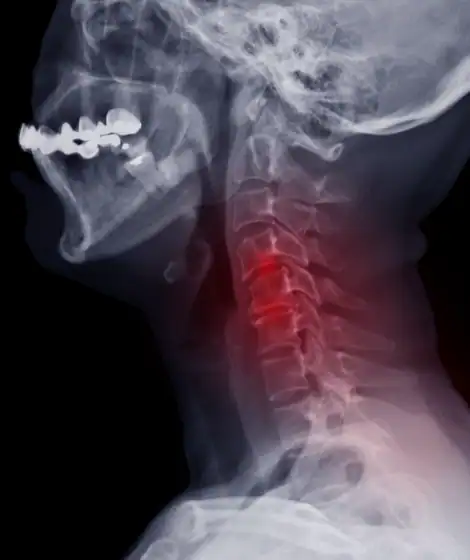
Anterior cervical discectomy and fusion (ACDF), often performed with instrumentation, treats selected cases of cervical nerve-root or spinal cord compression. The surgeon removes a diseased disc and compressive tissue, reconstructs the disc space, and stabilizes the level while bone fusion develops.
The decision depends on symptoms, neurologic findings, imaging, response to nonsurgical care, and patient goals. Progressive weakness or cervical myelopathy may require earlier surgery. An abnormal MRI alone is not an indication. This pathway supports shared decisions among patients, chiropractors, physical therapists, primary care clinicians, and spine specialists. [1,2]
What Is ACDF Surgery?
ACDF is surgery through the front of the neck to remove a damaged disc and relieve pressure on a nerve root or the spinal cord. A graft or cage reconstructs the disc space, and instrumentation may hold the vertebrae stable while they fuse. It is considered when clinical findings and imaging support surgical treatment.
Step 1. Identify the Condition Being Treated
Radiculopathy is nerve-root dysfunction that can cause radiating arm pain, numbness, reflex changes, or muscle weakness. Myelopathy is spinal cord dysfunction that may produce hand clumsiness, gait imbalance, leg stiffness, or abnormal reflexes. These conditions have different urgency and treatment goals.
Isolated neck pain has many potential sources and is a less predictable reason for ACDF than concordant nerve or cord compression. [1,2]
Step 2. Establish Urgency Before Prescribing More Treatment
Progressive motor weakness or new findings suggesting myelopathy warrant expedited spine assessment. Rapid neurologic deterioration, inability to walk, or new bladder/bowel dysfunction with neurologic symptoms requires emergency evaluation. Do not prolong routine therapy or manipulation while deterioration is occurring. [2]
For degenerative cervical myelopathy, guidelines recommend surgery for moderate or severe disease. Mild disease may be managed with surgery or a supervised rehabilitation trial and close follow-up; neurologic deterioration should prompt surgery.
Cord compression without myelopathy does not automatically require prophylactic surgery. Associated radiculopathy increases progression risk and warrants counseling and either surgical consideration or close observation. [2]
Step 3. Confirm That Examination and Imaging Agree
Document strength by muscle group, sensation, reflexes, gait, dexterity, and functional limitations. MRI defines disc herniation, foraminal narrowing, spinal canal stenosis, and cord changes. The proposed surgical level should explain the clinical findings. X-rays assess alignment; selected flexion-extension views assess instability. CT can clarify bony compression or anatomy when needed. [1,3]
Consider shoulder disease, carpal tunnel syndrome, ulnar neuropathy, and other neurologic disorders when findings do not fit. EMG/nerve-conduction studies can help clarify uncertain localization but are not mandatory when the diagnosis is clear. Avoid treating every degenerative level seen on MRI. [3]
Step 4. Decide Whether Nonsurgical Care Remains Appropriate
For stable radiculopathy without significant or progressive weakness, begin individualized education, activity modification, appropriate medication, and guided rehabilitation. Selected injections may reduce pain but do not remove compression.
Persistent disabling symptoms despite a reasonable trial, often six to twelve weeks, support surgical consultation. This interval is a guide, not a mandatory delay when neurologic function worsens. [3]
A small randomized trial found both physiotherapy alone and ACDF plus physiotherapy improved symptoms over five to eight years. Surgery produced greater improvement in neck disability and neck pain; between-group differences in arm pain and general health were not statistically significant. Surgery should therefore address a defined clinical problem rather than promise universal superiority. [4]
Step 5. Compare ACDF With Reasonable Alternatives
ACDF is useful when anterior disc-level compression requires decompression and stabilization. Cervical disc arthroplasty may preserve motion in appropriately selected patients; substantial facet arthritis, instability, poor bone quality, or advanced degeneration can limit suitability.
Posterior foraminotomy is an option for selected one-sided foraminal disease. In the FACET randomized trial, it was noninferior to ACDF at two years in the studied single-level radiculopathy population. [1,5]
Multilevel cord compression, kyphosis, compression behind a vertebral body, or complex instability may favor another anterior procedure, a posterior operation, or a combined approach. Ask why the proposed approach and number of levels best fit your anatomy and neurologic problem. [1,2]
Step 6. Understand Instrumentation, Fusion, and Preparation
Through an anterior neck approach, the surgeon removes the disc and relevant compressive material, then places a structural graft or cage, usually with bone graft material. A plate with screws or an integrated fixation device provides immediate stability.
Instrumentation supports healing; biologic fusion develops over subsequent months. Implant and graft choices should reflect anatomy, bone quality, levels treated, and surgeon judgment. No single construct is best for everyone. [1]
Before surgery, address nicotine exposure, diabetes control, nutrition, and medication planning. Patients with suspected osteoporosis should undergo appropriate bone-health evaluation; poor bone quality increases instrumentation-related risk. Do not stop anticoagulants or other prescribed medicines without a coordinated plan. Report previous neck surgery, swallowing problems, or voice changes so the team can tailor evaluation. [1,6,7]
Step 7. Balance Expected Benefits With Specific Risks
Goals include nerve or cord decompression, improved function, and stabilization. Arm pain may improve sooner than numbness or weakness. Longstanding nerve injury or myelopathy may leave residual deficits; preventing further decline can be an important benefit. [1,2]
Discuss swallowing difficulty, hoarseness, hematoma, infection, nerve or spinal cord injury, esophageal injury, nonunion (pseudarthrosis), implant problems, and possible reoperation. Prospective research shows swallowing symptoms are common early and usually diminish, although persistent symptoms occur.
Risks vary with baseline health, revision status, levels fused, and how complications are measured; ask for estimates applicable to your operation. Adjacent-level degeneration may develop over time and does not always become symptomatic or require surgery. [1,7]
Step 8. Follow Recovery Milestones and Recognize Emergencies
Begin walking as directed and follow individualized wound, lifting, collar, driving, and rehabilitation instructions. Desk work may resume within weeks for selected patients; heavy work takes longer. Functional improvement precedes mature fusion, which may take six to twelve months.
Follow-up examination and imaging guide activity progression. Avoid cervical thrust manipulation during healing and obtain surgeon clearance before resuming cervical manual treatment. [1]
After discharge, rapidly increasing neck swelling, trouble breathing, inability to swallow saliva, or new major weakness requires emergency care. Fever, wound drainage, progressive swallowing problems, or worsening pain warrants prompt contact with the surgical team. Discharge timing depends on airway risk, medical health, surgical extent, and reliable home support. [1,7]
Frequently Asked Questions
Does ACDF always include a plate?
No. Stabilization may use a separate plate and screws or an integrated device. The construct is selected for the individual operation. [1]
Will I lose neck motion?
Motion is eliminated at the fused level. The overall effect depends on how many levels are fused and the mobility of remaining segments. [1]
Can ACDF cure all neck pain?
No. It treats selected structural problems. Persistent muscular, joint-related, or other pain can remain despite successful decompression and fusion. [1,4]
When can I return to therapy or work?
Timing depends on neurologic recovery, work demands, surgical extent, and healing. Use the surgeon’s specific milestones rather than a universal calendar. [1]
What should I ask before consenting?
Ask which findings justify surgery, why ACDF is preferred, which levels need treatment, what recovery is realistic, and what alternatives and risks apply to you.
References
- American Academy of Orthopaedic Surgeons. Cervical Radiculopathy: Surgical Treatment Options. OrthoInfo.
- Fehlings MG, et al. A Clinical Practice Guideline for the Management of Patients With Degenerative Cervical Myelopathy. Global Spine J. 2017;7(3 Suppl):70S-83S. doi:10.1177/2192568217701914.
- Meron A, Wakim A, Nikolis L. Cervical Radiculopathy. PM&R KnowledgeNow. Updated March 27, 2024.
- Engquist M, et al. A 5- to 8-year randomized study on the treatment of cervical radiculopathy: anterior cervical decompression and fusion plus physiotherapy versus physiotherapy alone. J Neurosurg Spine. 2017;26:19-27.
- Simões de Souza NF, et al. Posterior Cervical Foraminotomy Compared with Anterior Cervical Discectomy with Fusion for Cervical Radiculopathy: Two-Year Results of the FACET Randomized Noninferiority Study. J Bone Joint Surg Am. 2024;106(18):1653-1663.
- Dimar J, et al. Congress of Neurological Surgeons Systematic Review and Evidence-Based Guidelines for Perioperative Spine: Preoperative Osteoporosis Assessment. Neurosurgery. 2021.
- Nguyen S, et al. Predictors of Dysphagia After Anterior Cervical Discectomy and Fusion: A Prospective Multicenter Study. Spine. 2022.