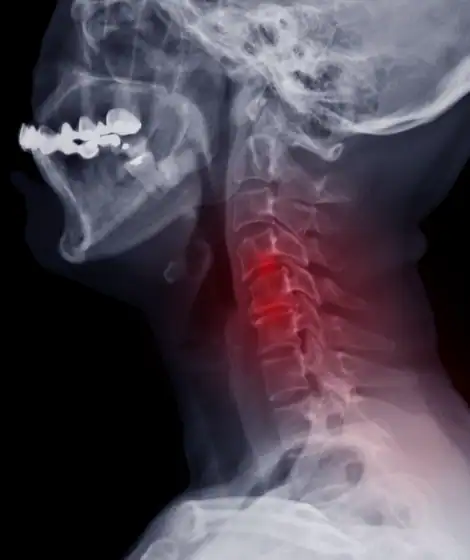
A clinical, evidence-based guide for chiropractors, physical therapists, nurse practitioners, and primary care physicians.
Cervical stenosis does not need to be painful to be dangerous. Many clinicians tie surgical decision-making to intractable neck or arm pain, but the primary indication for surgery in cervical stenosis is often progressive neurologic compromise, not pain severity. A patient with minimal discomfort may still harbor significant spinal cord compression and early myelopathy.
This review outlines when cervical stenosis warrants surgical evaluation even in the absence of severe pain, with emphasis on recognizing neurologic decline, identifying red flags, interpreting imaging, and facilitating timely referral.
What Cervical Stenosis Is, and When It Threatens the Cord
Cervical stenosis refers to narrowing of the spinal canal, typically caused by:
When stenosis compresses the spinal cord, patients can develop cervical myelopathy. Surgical approaches such as anterior cervical discectomy and fusion, cervical disc replacement, or posterior decompression are performed to relieve cord compression and prevent neurologic deterioration. Pain is not required for surgical candidacy.
The Misconception: “If It Doesn’t Hurt, It’s Not Surgical”
A common clinical assumption is that surgery is reserved for severe radicular pain, intractable neck pain, or failure of conservative therapy. For cervical stenosis with spinal cord compression, however, progressive neurologic dysfunction is the primary indication for intervention.
Patients may report only minimal neck discomfort, mild or absent arm pain, or vague stiffness, yet still demonstrate objective neurologic deficits on examination. That gap between how a patient feels and what the cord is actually experiencing is the core of the problem.
Seeing neurologic signs without much pain?
That combination is exactly when a fast surgical opinion matters most. Dr. Wascher offers referring providers a free MRI review and second opinion, with documented career outcomes for full transparency.
Call (855) 854-9274 or send your patient for evaluation.
When Cervical Stenosis Becomes Surgical Without Severe Pain
Short answer for quick reference: cervical stenosis warrants surgical evaluation when spinal cord compression causes neurologic dysfunction such as gait imbalance, hyperreflexia, hand clumsiness, or progressive weakness, even if neck or arm pain is minimal. The decision is based on neurologic decline, not pain severity. Five patterns should raise that concern.
1. Objective Signs of Myelopathy
Surgical evaluation is warranted when any of the following are present: hyperreflexia, pathologic reflexes (Hoffmann’s, Babinski, clonus), gait instability, hand clumsiness, or loss of fine motor control. Even mild findings should not be dismissed. Myelopathy is progressive, and once cord dysfunction begins, nonoperative care does not reliably reverse the decline.
2. Progressive Neurologic Deterioration
Red flags include worsening balance, increasing hand weakness, bilateral numbness, declining dexterity, and new bladder symptoms. The severity of pain does not correlate with the severity of cord compression, so a stable pain level does not mean a stable cord.
3. MRI Evidence of Significant Cord Compression
Imaging findings that raise surgical consideration include cord flattening, effacement of cerebrospinal fluid, T2 signal change within the cord, multilevel severe stenosis, and a canal diameter below approximately 10 mm. Imaging must correlate with examination findings. Incidental stenosis without neurologic signs is not automatically surgical. For a fuller breakdown, see our guide to MRI findings that require referral.
4. Early Gait Disturbance
Subtle balance changes may be the earliest manifestation of cervical myelopathy. Patients may describe feeling “off balance,” difficulty in dim lighting, slower walking speed, or hesitation on stairs. These symptoms often precede severe weakness or pain, which is why recognizing the early signs of cervical myelopathy matters at the frontline.
5. Bilateral Upper Extremity Symptoms
Unilateral radiculopathy, often from foraminal stenosis, frequently responds to conservative care. Bilateral, symmetric symptoms, especially when combined with hyperreflexia, suggest central cord involvement and deserve a lower threshold for imaging and referral.
Evidence on the Timing of Surgery
Multiple longitudinal studies point in the same direction: earlier decompression yields better neurologic recovery, longer symptom duration predicts worse postoperative outcomes, and delayed treatment increases the risk of irreversible spinal cord injury. Unlike radiculopathy, degenerative cervical myelopathy rarely improves with prolonged nonoperative management once progression occurs.
When Conservative Care Is Appropriate
Not all cervical stenosis requires surgery. Observation may be reasonable when there are no objective neurologic deficits, symptoms are stable, imaging shows mild to moderate stenosis, and no cord signal change is present. These patients still require close clinical monitoring, because the picture can change.
Clinical Pearls for Front-Line Providers
Perform Reflex Testing Routinely
Do not skip Hoffmann’s sign, Babinski reflex, clonus testing, and tandem gait. Subtle findings often change management decisions.
Do Not Anchor on Pain
The absence of severe pain does not exclude surgical pathology. Pain is a poor proxy for how much the cord is compromised.
Monitor Functional Decline
Ask specific questions: Are you dropping objects? Has your handwriting changed? Are stairs more difficult? Do you feel unsteady in the dark? Answers to these can reveal early myelopathy that a pain-focused history would miss.
Red Flags Requiring Urgent Referral
Immediate surgical consultation is appropriate for progressive neurologic decline, new bowel or bladder dysfunction, severe gait disturbance, rapid symptom progression, or MRI showing severe cord compression with signal change. Timely referral protects neurologic function.
A Collaborative Referral Model
Chiropractors, physical therapists, nurse practitioners, and primary care physicians often identify early deterioration before a catastrophic event occurs. Framing referral as a neurologic safety evaluation, diagnostic clarification, and a surgical opinion rather than automatic surgery reassures patients and strengthens interdisciplinary trust. Referral is a checkpoint, not a commitment to an operation.
Refer for a neurologic safety check
When stenosis meets neurologic signs, the safest next step is a specialist look, not a longer wait. Dr. Thomas Wascher has performed more than 4,500 cervical spine surgeries and documents every outcome.
Call (855) 854-9274 or request a free MRI review. See our documented outcomes.
Frequently Asked Questions
Can cervical stenosis require surgery without significant neck or arm pain?
Yes. Surgery is indicated when cervical stenosis causes spinal cord dysfunction (myelopathy), even if neck or arm pain is mild or absent. The decision is driven by neurologic status, not pain severity.
What signs should prompt referral when a patient with stenosis has little pain?
Objective signs of myelopathy: hyperreflexia, a positive Hoffmann’s or Babinski sign, clonus, gait instability, hand clumsiness, and loss of fine motor control. Bilateral symptoms and any progressive deficit lower the threshold further.
Does incidental stenosis found on MRI need a referral?
Not by itself. Imaging must correlate with examination findings. Incidental stenosis without neurologic signs is not automatically surgical, though it does warrant monitoring and clinical correlation.
Can conservative care reverse myelopathy caused by stenosis?
Conservative management may slow progression in mild cases but does not reliably reverse established cord compression. Once cord dysfunction begins, decompression is generally required to halt decline.
How urgently should progressive stenosis symptoms be referred?
Promptly. Progressive neurologic decline, new bowel or bladder dysfunction, severe gait disturbance, or rapid symptom progression all warrant urgent surgical consultation rather than continued watchful waiting.
Authored and reviewed by Thomas Wascher, MD, FACS, of Wascher Cervical Spine Institute in Appleton, WI. This article is intended as clinical reference material for referring providers and does not replace individualized medical judgment.