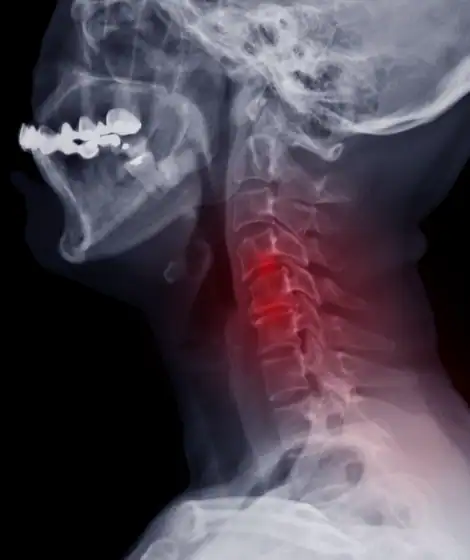
Most patients with cervical radiculopathy improve without surgery. The clinical skill is knowing which patients do not, and when to escalate. This cervical radiculopathy referral algorithm walks through diagnosis, red-flag screening, conservative care, and the timeline that separates safe observation from surgical evaluation.
Step 1: Confirm the Clinical Diagnosis
Look for a consistent history and exam before anything else.
History:
- Unilateral arm pain in a dermatomal distribution
- Neck pain with arm radiation
- Numbness or paresthesia
- Possible motor weakness
- Symptoms worsened by neck extension or rotation
Physical examination:
- Dermatomal sensory loss
- Myotomal weakness
- Reflex changes
- Positive Spurling’s test
- Positive cervical distraction test
If clinical findings suggest radiculopathy, proceed to neurologic severity assessment.
Step 2: Screen for Immediate Referral Red Flags
Immediate referral is indicated if any of the following are present.
Motor Deficit
Objective weakness in a nerve root distribution, especially progressive weakness. Examples include deltoid weakness (C5), biceps weakness (C6), triceps weakness (C7), and hand weakness (C8). Motor deficit is the strongest predictor of the need for surgery.
Signs of Cervical Myelopathy
Gait instability, loss of hand dexterity, hyperreflexia, Hoffmann’s sign, Babinski sign, clonus, and balance impairment all point to spinal cord involvement. These signs indicate possible cervical myelopathy and require urgent referral.
Progressive Neurologic Deficit
Increasing weakness, expanding sensory loss, or declining neurologic function.
Severe or Rapidly Worsening Neurologic Symptoms
If any red flag is present, refer immediately to a spine surgeon. Do not delay for prolonged conservative care.
Red flag in front of you?
Motor deficit, myelopathy signs, or rapid progression means the clock is running. Dr. Wascher offers referring providers a free MRI review and fast surgical evaluation, with documented outcomes for every case.
Call (855) 854-9274 or send your patient for evaluation.
Step 3: No Red Flags? Start Conservative Treatment
Appropriate first-line treatment includes the following.
Physical therapy: cervical stabilization, postural correction, neural mobilization, and traction in selected cases.
Medications: NSAIDs, a short oral steroid course (optional), and neuropathic agents such as gabapentin or pregabalin.
Activity modification: avoid provocative activities while maintaining general activity.
Optional: epidural steroid injection after 4 to 6 weeks if symptoms persist.
Step 4: Reassess at 4 to 6 Weeks
- Improving: continue conservative care. No referral necessary.
- Stable but persistent: continue conservative treatment and consider MRI if not already obtained.
- Worsening: obtain MRI and refer for surgical evaluation.
Step 5: Reassess at 6 to 12 Weeks
- Significant improvement: continue nonoperative care. No referral required.
- Persistent symptoms despite appropriate conservative care: obtain MRI (if not already done) and refer for surgical evaluation.
Persistent compression beyond this timeframe may impair nerve recovery. For a deeper look at how long is reasonable, see our guide on the optimal duration of non-operative care in cervical radiculopathy.
Step 6: MRI-Based Referral Criteria
Refer if MRI shows:
MRI findings must match the clinical presentation. Do not refer based on MRI findings alone without clinical correlation. For the broader imaging picture, see our guide to MRI findings that require referral.
Step 7: Special Situations That Warrant Earlier Referral
Consider early referral even without a severe deficit if the patient has significant functional impairment, an inability to work, severe persistent pain despite treatment, recurrent radiculopathy, or a clear preference for surgical evaluation after failed conservative care. When surgery is appropriate, options may include posterior cervical (keyhole) foraminotomy, anterior cervical discectomy, or artificial cervical disc replacement, depending on the cause and location of compression.
The Algorithm at a Glance
Patient with suspected cervical radiculopathy → perform neurologic exam →
- Motor deficit OR myelopathy OR progressive neurologic deficit? Yes → immediate surgical referral. No → conservative treatment.
- Reassess at 4 to 6 weeks: improving → continue conservative care; not improving or worsening → MRI and refer.
- Reassess at 6 to 12 weeks: resolved or improving → continue conservative care; persistent symptoms with MRI-confirmed compression → refer.
Practical Referral Timing Summary
- Immediate referral: motor weakness, myelopathy, progressive neurologic deficit
- Early referral (4 to 6 weeks): worsening symptoms, severe functional impairment
- Routine referral (6 to 12 weeks): persistent symptoms despite conservative care, MRI-confirmed nerve root compression
- No referral needed: mild symptoms, no neurologic deficit, improving symptoms
Key Evidence-Based Principles
- Most patients improve without surgery.
- Motor deficit is the strongest indication for referral.
- Myelopathy requires urgent referral.
- Earlier decompression improves neurologic recovery when weakness is present.
- Persistent symptoms beyond 6 to 12 weeks warrant evaluation.
Not sure if it’s time to refer?
When conservative care stalls or a deficit appears, a fast surgical opinion protects your patient’s recovery window. Dr. Thomas Wascher has performed more than 4,500 cervical spine surgeries and documents every outcome.
Call (855) 854-9274 or request a free MRI review. See our documented outcomes.
Frequently Asked Questions
What are the red flags that require immediate surgical referral in cervical radiculopathy?
Refer immediately for objective motor weakness in a nerve root distribution (especially if progressive), any signs of cervical myelopathy such as gait instability, hyperreflexia, Hoffmann’s sign, or clonus, and any rapidly worsening neurologic deficit. These do not warrant prolonged conservative care.
How long should conservative care continue before referring cervical radiculopathy?
Reassess at 4 to 6 weeks and again at 6 to 12 weeks. Improving patients continue nonoperative care. Patients with persistent symptoms and MRI-confirmed compression at 6 to 12 weeks should be referred, because prolonged compression may impair nerve recovery.
Can a patient be referred for surgery based on MRI findings alone?
No. MRI findings must correlate with the clinical presentation. Imaging abnormalities are common and are not, by themselves, a reason to refer. Refer when nerve root compression on MRI matches the patient’s symptoms and exam.
What is the strongest predictor that cervical radiculopathy needs surgery?
An objective motor deficit in a nerve root distribution is the strongest predictor of the need for surgery, particularly when the weakness is progressive.
When is early referral appropriate even without a severe deficit?
Consider early referral for significant functional impairment, inability to work, severe persistent pain despite treatment, recurrent radiculopathy, or patient preference after failed conservative care.
Authored and reviewed by Thomas Wascher, MD, FACS, of Wascher Cervical Spine Institute in Appleton, WI. This algorithm is intended as clinical reference material for referring providers and does not replace individualized medical judgment.