Whether you’re exploring your options or ready to schedule a consultation, we’re here to help you take the next step toward a pain-free life.

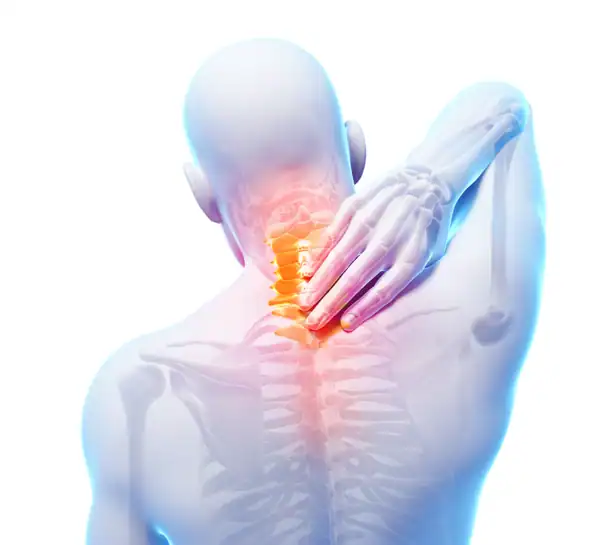
Pseudarthrosis is a failed fusion following cervical spinal fusion surgery, occurring when the bone graft doesn't fuse properly with the vertebrae above and below it. When a herniated or bulging disc in the neck is removed, cervical fusion is performed to replace it with a bone graft that normally fuses with the surrounding vertebrae. However, in some cases, this fusion does not occur, leading to abnormal movement of the bones within the spinal column and persistent neck pain. Pseudarthrosis may also describe a fracture that fails to heal or fuse together properly and is a common complication of cervical spinal fusion surgery. At Wascher Cervical Spine Institute in Appleton, WI, Dr. Thomas Wascher has achieved a 99% improvement rate, treating over 252+ cases.
Pseudarthrosis occurs when bones fail to fuse with one another after spinal fusion surgery. Factors that reduce the ability of bone-producing cells, called osteoblasts, to produce new bone for fusion increase the risk.
The most common contributor to pseudarthrosis is smoking. Nicotine blocks the ability of osteoblasts to form new bone. This is why smoking cessation is critical both before and after fusion surgery.
Other factors that increase the risk of pseudarthrosis include malnutrition, obesity, osteoporosis, diabetes, and rheumatoid arthritis. People who use oral steroids or non-steroidal anti-inflammatory medications are also at higher risk. The elderly are more likely to develop pseudarthrosis, as are those who do not allow enough recovery time following fusion surgery. Too much activity will prevent the bones from fusing properly.


Common Symptoms: The most common symptom of pseudarthrosis after cervical fusion surgery is neck pain, although some people exhibit no symptoms. The neck pain may be aggravated by neck movement and can radiate into the shoulder or arm.
Diagnostic Process: Pseudarthrosis can sometimes be diagnosed using neck X-rays, including flexion and extension views. Flexion and extension neck X-rays are taken with the neck in both flexed and extended positions. This dynamic type of X-ray is more likely to reveal abnormal motion at the site of fusion.
In some cases, more advanced imaging studies such as nuclear medicine bone scans, CT scans, MRI scans, or surgical exploration may be needed before making the diagnosis.
In the absence of significant symptoms, surgery may not be necessary. For those who do have symptoms, a repeat fusion may be needed to give the bones a second chance to heal and fuse properly.
Revision Fusion Surgery: Revision fusion surgery may involve cervical spine fusion or posterior cervical decompression, instrumentation, and fusion. Using additional hardware, such as titanium plates, may add the required support and stabilization. Surgery can be offered both anteriorly and posteriorly, depending on the specific situation.
Vanessa had years of neck pain leaving her unable to even do her daily work. But with Dr. Wascher’s quick and timely intervention that included multiple viewings of MRIs, muscle and nerve tests, followed by a 3-Level Anterior Cervical Fusion, she is now happy without any neck issues. “I can happily say that by following the recommendations of Dr. Wascher, I am now pain-free,” says Vanessa as she talks about how great Dr. Wascher and his team were to work with.
When Nanette experienced deep pain in her shoulder, she got tests performed, only to discover that she, in fact, had issues with her neck instead. After a few MRIs and scans, she contacted Dr. Wascher, who told her that she has bone spurs going into the spinal cord. Within a span of 3 weeks, she was able to go through surgery and get on the road to recovery. “I cannot say enough about Dr. Wascher’s expertise and empathy”, says Nanette as she joins an ever-growing community of people who, through Dr. Wascher and his team, have found happiness again.
Dr. Thomas Wascher brings over 30 years of specialized cervical spine expertise to the treatment of pseudarthrosis. His experience with over 252 anterior-posterior cases has achieved a 99% improvement rate. Dr. Wascher's microscopic surgical techniques result in smaller scars, less pain, and faster recovery.
The practice offers free MRI reviews and second opinions at 5320 W. Michaels Dr., Appleton. Dr. Wascher graduated valedictorian from high school, college, and medical school, and has been recognized in America's Top Surgeons since 2007.




Pseudarthrosis and nonunion both describe situations where bones fail to fuse or heal properly. In spinal surgery, pseudarthrosis specifically refers to failed fusion after a fusion procedure.
Smoking is the most common contributor to pseudarthrosis because nicotine blocks the ability of bone-producing cells to form new bone. Patients are strongly advised to stop smoking before and after fusion surgery to maximize fusion success.
Pseudarthrosis is diagnosed through imaging studies. Flexion and extension X-rays show abnormal movement at the fusion site. Additional studies like CT scans, MRI scans, or nuclear medicine bone scans may be needed.
No, surgery is not always necessary. In the absence of significant symptoms, pseudarthrosis may be monitored. For those who have symptoms like persistent neck pain, revision fusion surgery may be needed.