Whether you’re exploring your options or ready to schedule a consultation, we’re here to help you take the next step toward a pain-free life.


Primary tumors of the cervical spine are rare growths originating in the spinal cord, nerves, or their protective coverings rather than spreading from elsewhere. These tumors fall into two categories: intramedullary tumors (25%) which grow within the spinal cord tissue itself, most commonly astrocytomas arising from supporting cells, and intradural extramedullary tumors (75%) which develop within the protective covering but outside the spinal cord, including meningiomas (75% of this category) and nerve sheath tumors like schwannomas (20%). The overwhelming majority are benign, with only 2% being malignant. While uncommon, these tumors require specialized expertise as they directly involve the spinal cord and can cause progressive neurological damage if untreated. At Wascher Cervical Spine Institute in Appleton, WI, Dr. Thomas Wascher has successfully treated over 250 tumors involving the spine and spinal cord using advanced microsurgical techniques.
Even small tumors can cause significant symptoms by compressing the spinal cord. As they grow, symptoms progress from localized pain to affecting one side, eventually becoming bilateral. Early treatment preserves function rather than restoring it, as significant improvement rarely occurs after longstanding deficits.
Warning Signs: Initial symptoms include poorly localized neck or shoulder pain that doesn't improve with treatment. As tumors grow, neurological symptoms develop, including arm or leg weakness, sensory loss not following typical nerve patterns, difficulty walking, and bowel or bladder involvement.
Red Flags: Progressive weakness, rapidly worsening symptoms, loss of bowel or bladder control, or difficulty walking require urgent evaluation, indicating advancing spinal cord compression.
Diagnostic Process: Enhanced MRI of the cervical spine reveals tumor location, size, and relationship to surrounding structures. Findings must be distinguished from conditions such as transverse myelitis or multiple sclerosis. Spinal angiography may be performed for large vascular tumors.
Observation: Very small, asymptomatic tumors discovered incidentally may be monitored with serial MRI scans every 3-6 months.
Surgical Treatment: Surgery is the primary treatment for symptomatic or growing tumors. For intramedullary tumors, surgery involves posterior cervical decompression to expose the spinal cord, obtain tissue diagnosis, and remove as much tumor as safely possible using a surgical laser and an ultrasonic aspirator.
For intradural extramedullary tumors, the goal is complete removal through laminectomy with or without fusion. Intraoperative neuromonitoring provides real-time feedback on spinal cord function, reducing permanent deficits to less than 10%.
Recurrent tumors may be treated with stereotactic radiosurgery, delivering targeted radiation while sparing healthy tissue.
Recovery: Almost all patients experience temporary sensory changes immediately after surgery. Follow-up MRI scans at 3-6 month intervals monitor for recurrence. Completely resected benign tumors typically result in cure.
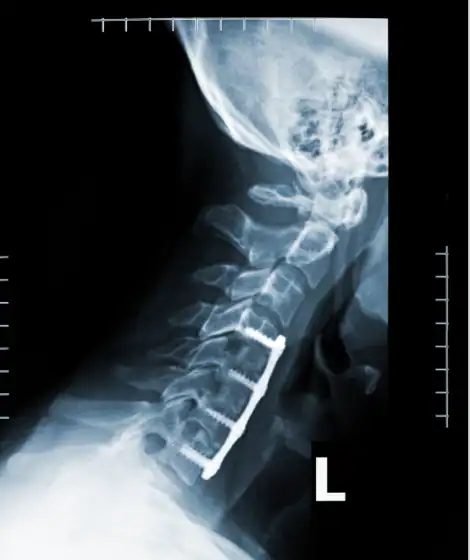
Vanessa had years of neck pain leaving her unable to even do her daily work. But with Dr. Wascher’s quick and timely intervention that included multiple viewings of MRIs, muscle and nerve tests, followed by a 3-Level Anterior Cervical Fusion, she is now happy without any neck issues. “I can happily say that by following the recommendations of Dr. Wascher, I am now pain-free,” says Vanessa as she talks about how great Dr. Wascher and his team were to work with.
When Nanette experienced deep pain in her shoulder, she got tests performed, only to discover that she, in fact, had issues with her neck instead. After a few MRIs and scans, she contacted Dr. Wascher, who told her that she has bone spurs going into the spinal cord. Within a span of 3 weeks, she was able to go through surgery and get on the road to recovery. “I cannot say enough about Dr. Wascher’s expertise and empathy”, says Nanette as she joins an ever-growing community of people who, through Dr. Wascher and his team, have found happiness again.
Dr. Thomas Wascher brings over 30 years of specialized cervical spine expertise to the treatment of these rare, complex conditions. His experience treating over 250 tumors involving the spine and spinal cord provides the specialized skill these cases demand. Dr. Wascher's microscopic surgical techniques result in smaller scars, less pain, and faster recovery compared to traditional approaches.
Located in Appleton at 5320 W. Michaels Dr., the practice offers free MRI reviews and second opinions to all potential patients. Dr. Wascher graduated valedictorian from high school, college, and medical school and has been recognized as one of America's Top Surgeons since 2007. His philosophy of treating everyone as a family member with a unique approach ensures personalized care rather than one-size-fits-all treatment.




Primary tumors originate in the spine from spinal cord tissue, nerves, or protective membranes. Metastatic tumors start in other organs and travel to the spine. Primary tumors are rare and mostly benign, while metastatic tumors are more common and malignant, requiring different treatment approaches.
No, most primary spinal cord tumors are benign. Only about 2% of intramedullary tumors are malignant. However, even benign tumors require treatment when causing symptoms, as their location within the spinal canal can cause progressive neurological damage.
Complete removal depends on tumor type. Intradural extramedullary tumors often have clear boundaries, allowing total resection. Intramedullary tumors within spinal cord tissue are more challenging. Dr. Wascher uses advanced microsurgical techniques, laser technology, and real-time monitoring to maximize safe tumor removal.
Untreated tumors grow progressively, causing increasing spinal cord compression. Initial mild symptoms worsen to include severe deficits, paralysis, sensory loss, and bowel or bladder control loss. Treatment preserves existing function, which is why early diagnosis is critical.
Recovery varies based on tumor type, location, and pre-operative neurological status. Most patients experience temporary sensory changes immediately after surgery. Recovery is proportionate to the extent of pre-operative deficits - patients with minimal symptoms before surgery typically recover better than those with longstanding advanced symptoms. Dr. Wascher's microsurgical techniques have reduced permanent complications to less than 10%.