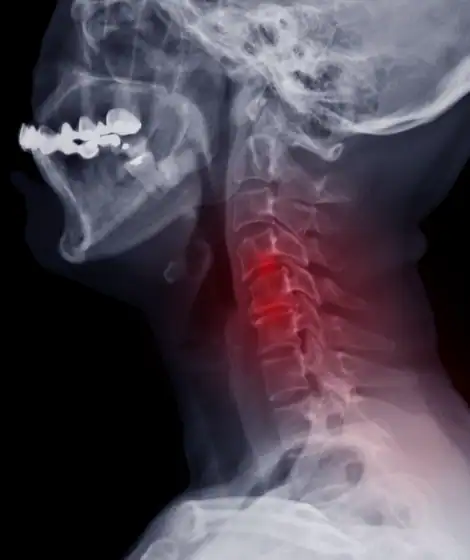
A Clinical Guide for Chiropractors, Physical Therapists, and Primary Care Physicians
Introduction
Magnetic resonance imaging (MRI) is the gold standard for evaluating cervical spine pathology involving neural structures, including the spinal cord, nerve roots, and surrounding soft tissues. MRI findings frequently guide referral decisions, particularly when neurological compromise or structural instability is present.
However, degenerative findings are extremely common, especially in asymptomatic adults over age 40. Studies demonstrate that over 60% of asymptomatic individuals have disc bulges, and over 20% have spinal cord compression without symptoms. Therefore, the clinical challenge is distinguishing incidental findings from those that represent clinically significant pathology requiring specialist evaluation.
This article reviews MRI findings that warrant referral to a spine specialist or neurosurgeon, with emphasis on spinal cord compression, signal change, severe stenosis, progressive neurological risk, and structural instability.
Understanding the Difference Between Degenerative Findings and Clinically Significant Pathology
Many MRI abnormalities do not require referral if the patient is neurologically intact and symptoms are stable. Common incidental or low-risk findings include:
- Mild disc bulges without neural compression
- Mild foraminal narrowing
- Age-related disc desiccation
- Mild facet arthropathy
- Mild loss of disc height
Referral decisions should focus primarily on findings associated with:
- Spinal cord compression
- Nerve root compression with neurological deficit
- Structural instability
- Progressive deformity
- Cord signal abnormality
- Space-occupying lesions
MRI findings must always be interpreted in conjunction with clinical presentation.
To refer a patient or discuss MRI findings with Dr. Wascher, call (855) 854-9274 or request a consultation online.
Spinal Cord Compression: The Most Important Finding Requiring Referral
Definition and MRI Appearance
Spinal cord compression occurs when surrounding structures reduce the available space for the spinal cord, producing deformation. MRI may show:
- Effacement of cerebrospinal fluid (CSF) around the cord
- Direct indentation of the cord
- Cord flattening
- Cord displacement
Compression may result from:
Clinical Significance
Spinal cord compression significantly increases risk of cervical myelopathy, which may cause:
- Hand dysfunction
- Gait impairment
- Weakness
- Permanent neurological deficits if untreated
Even in the absence of symptoms, moderate to severe cord compression warrants specialist evaluation due to risk of progression.
Spinal Cord Signal Change (T2 Hyperintensity)
MRI Appearance
T2-weighted MRI may show hyperintense signal within the spinal cord. This represents:
- Edema
- Gliosis
- Demyelination
- Chronic cord injury
T1 hypointensity represents more advanced injury and correlates with worse prognosis.
Clinical Significance
Cord signal change is strongly associated with:
- Established spinal cord injury
- Worse neurological function
- Higher risk of progression
- Less complete neurological recovery if untreated
Multiple studies show that T2 signal change correlates with poorer functional outcomes. Referral is recommended when cord signal abnormality is present, even if symptoms are mild.
Severe Central Canal Stenosis
Definition
Central canal stenosis refers to narrowing of the spinal canal. MRI indicators include:
- Loss of CSF around the cord
- Canal diameter less than 10 mm (absolute stenosis)
- Cord compression or deformation
Severity categories:
- Mild stenosis: CSF still visible around cord
- Moderate stenosis: partial CSF effacement
- Severe stenosis: complete CSF effacement and cord compression
Clinical Significance
Severe cervical stenosis significantly increases risk of:
- Cervical myelopathy
- Spinal cord injury from minor trauma
- Progressive neurological dysfunction
Patients with severe stenosis should be referred even in the absence of severe symptoms.
Large Disc Herniation Causing Neural Compression
MRI Appearance
Disc herniations may compress:
- Spinal cord (central herniation)
- Nerve roots (foraminal or paracentral herniation)
Important characteristics include:
- Size of herniation
- Degree of neural compression
- Presence of cord deformation
Referral Indications
Referral is appropriate when herniation causes:
- Cord compression
- Severe nerve root compression with neurological deficit
- Progressive symptoms
- Failure of conservative care
Large central disc herniations carry risk of acute neurological deterioration.
Foraminal Stenosis with Objective Neurological Deficit
Foraminal stenosis compresses exiting nerve roots. MRI findings include:
- Narrowing of neural foramen
- Loss of perineural fat signal
- Direct nerve root compression
Referral is indicated when MRI findings correlate with:
- Motor weakness
- Reflex loss
- Progressive radiculopathy
- Persistent symptoms despite conservative care
Severe foraminal stenosis with weakness warrants specialist evaluation.
Ossification of the Posterior Longitudinal Ligament (OPLL)
MRI Appearance
OPLL appears as a thickened, ossified ligament along the posterior vertebral bodies. It often produces:
- Significant spinal canal narrowing
- Spinal cord compression
Clinical Significance
OPLL is associated with:
- Progressive spinal cord injury
- Increased surgical complexity
- Higher risk of neurological deterioration
Referral is recommended when OPLL causes significant stenosis or cord compression.
Cervical Spine Instability
While MRI is not the primary modality for diagnosing instability, it may show indirect indicators such as:
Instability increases risk of:
- Cord injury
- Progressive deformity
Referral is appropriate when instability is suspected.
Spinal Cord Compression with Clinical Myelopathy
MRI findings combined with clinical signs such as:
- Hyperreflexia
- Hoffmann sign
- Gait disturbance
- Weakness
represent a clear indication for referral. Early surgical evaluation is associated with better neurological outcomes.
Intramedullary Lesions
MRI may detect spinal cord lesions such as:
- Tumors (ependymoma, astrocytoma)
- Multiple sclerosis plaques
- Syringomyelia
These require specialist evaluation and often urgent referral.
Epidural Masses or Infection
MRI findings such as:
- Epidural abscess
- Tumor
- Hematoma
require urgent referral. These may cause rapid neurological deterioration.
Progressive Deformity or Kyphosis with Neural Compression
Cervical kyphosis may contribute to spinal cord compression. MRI may show:
- Cord compression at apex of deformity
- Multilevel stenosis
Referral is appropriate when deformity contributes to neural compromise.
Congenital Cervical Stenosis
Patients with congenitally narrow canals are at increased risk of myelopathy. MRI findings include:
- Reduced canal diameter
- Multilevel cord compression
These patients may deteriorate earlier and should be evaluated by a specialist.
MRI Findings That Typically Do Not Require Immediate Referral
Findings that may be managed conservatively include:
- Mild disc bulges without neural compression
- Mild foraminal narrowing without neurological deficit
- Degenerative disc disease without stenosis
- Mild facet arthropathy
Referral may still be appropriate if symptoms persist or worsen.
Importance of Clinical Correlation
MRI findings must be interpreted in conjunction with:
- Neurological examination
- Symptom severity
- Functional impairment
- Symptom progression
MRI abnormalities alone do not always require intervention. However, certain findings — particularly spinal cord compression — warrant specialist evaluation regardless of symptom severity.
Role of Conservative Providers in Early Identification and Referral
Chiropractors, physical therapists, and primary care physicians frequently obtain or review MRI findings. Early identification of high-risk MRI findings allows:
- Timely specialist referral
- Prevention of neurological deterioration
- Improved patient outcomes
Cervical manipulation is generally contraindicated in patients with significant cord compression.
View Dr. Wascher’s documented career outcomes — complete transparency for referring providers and patients alike.
Prognostic Importance of Early Referral
Numerous studies demonstrate that outcomes are superior when:
- Referral occurs early
- Neurological deficits are mild
- Cord signal change is minimal
Delayed referral may result in permanent neurological impairment.
To refer a patient or request a consultation, contact Wascher Cervical Spine Institute at (855) 854-9274 or submit a referral request online.
Executive Summary
MRI is the gold standard for evaluating cervical spine pathology and identifying patients who require referral to a spine specialist.
MRI findings that require referral include:
- Spinal cord compression
- Spinal cord T2 signal change
- Severe central canal stenosis
- Large disc herniation compressing the cord
- Foraminal stenosis with neurological deficit
- Ossification of the posterior longitudinal ligament (OPLL)
- Cervical instability
- Intramedullary lesions
- Epidural mass, infection, or hematoma
- Congenital cervical stenosis with cord compression
Spinal cord compression is the most important finding requiring referral, even in patients with mild or subtle symptoms.
Cord signal change indicates spinal cord injury and is associated with worse outcomes if untreated.
Common degenerative findings such as mild disc bulges or mild stenosis may be managed conservatively unless neurological deficits or progression occur.
Early referral improves neurological outcomes and helps prevent permanent spinal cord injury. Chiropractors, physical therapists, and primary care physicians play a critical role in identifying concerning MRI findings and facilitating timely specialist evaluation.